


Electronic Invoicing
ViDA Directive: electronic invoicing at EU level
The ViDA directive finally adopted by the EU! What's at stake for electronic invoicing in France and beyond? What are the impacts and key dates for...

6
min
 6 mins read


Mandatory electronic invoicing is a global trend. Initiated in Latin America in the early 2000s, e-invoicing is now becoming widespread around the world in response to the same challenges: tax compliance, fraud prevention, cost reduction and process acceleration.
But behind this universal term lie very different approaches depending on the region of the world. 👉Get up to speed on the various regulations in place with this comprehensive overview of the models, standards and obligations currently in force.
Summary
Regulations on invoice dematerialisation are not all based on the same model. The world is divided between post-audit and clearance, with the latter gaining significant momentum.
In this model, invoices circulate directly between suppliers and customers. The tax authorities only intervene after the fact (once the transaction has been completed) to carry out their checks. Flexible for businesses, this model does not offer real-time visibility to the authorities.
📌 This is the traditional model for many countries in North America, Africa and Europe. It is now facing increasing competition from the clearance model.
With clearance, the invoice must be submitted electronically and validated by the authorities before being sent to the customer. This is a major step towards real-time transaction control (CTC - Continuous Transaction Controls) by the tax authorities.
📌 This model is very widespread in Latin America (Mexico, Brazil, Chile), a pioneering region for clearance as a means of combating tax fraud. It is now gaining ground in Asia (Malaysia, India) and Europe (Italy, Spain, Turkey, etc.).
Everywhere, the adoption of e-invoicing requires an exchange network. In recent years, there has been an acceleration around the Peppol network. It has become a key infrastructure for electronic invoicing in Europe and beyond.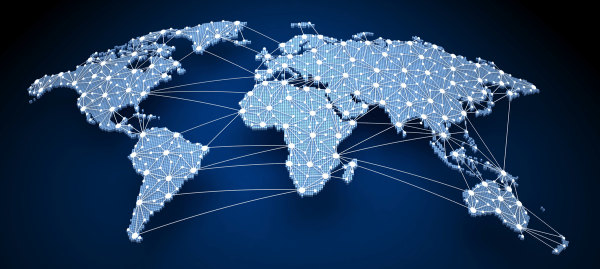
Launched by the European Union in 2008, Peppol (Pan-European Public Procurement Online) is an international network that facilitates and standardises the exchange of electronic business documents (invoices, orders, etc.) between businesses and public administrations.
📌 Peppol is based on a secure architecture incorporating certified access points and unique identifiers for each participant, ensuring the interoperability and traceability of exchanges.
Peppol is widely adopted in Europe, particularly for public procurement (B2G) but also between businesses (B2B). France has incorporated Peppol into its reform on mandatory electronic invoicing, with the DGFiP becoming the French Peppol Authority responsible for facilitating interoperability between private platforms.
📌 Although originally designed for Europe, Peppol is now establishing itself as a global standard. More than 40 countries have integrated Peppol into their national electronic invoicing systems, including:
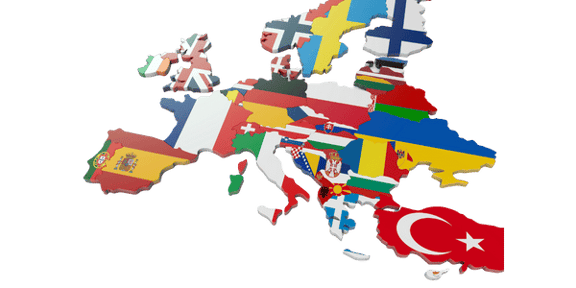
Germany: gradual obligation in the B2B sector
PLEASE NOTE: Approved Platforms is the new name for Partner Dematerialisation Platforms.👉See the article on the latest updates to electronic invoicing in France.
The ViDA Directive, adopted by the European Commission in March 2025, provides a clear framework that should facilitate the widespread use of domestic and cross-border electronic invoices within the European Union:
As we can see, electronic invoicing is becoming a global standard... within which local particularities remain. Between the Clearance and Post-Audit models, the various invoice exchange systems (public invoicing portal, Peppol network, approved private platforms), and dedicated formats, companies must adapt to the specificities of various national regulations.
The good news is that global solutions do exist. ITESOFT offers an approved e-invoicing platform covering more than 70 countries, guaranteeing compliance, interoperability and performance. Please do not hesitate to contact us. Our teams will be happy to help you with your transition.
Sources
▶️Peppol : https://peppol.org/about/
▶️UN/CEFACT (United Nations Centre for Trade Facilitation and Electronic Business) : https://unece.org/trade/uncefact
▶️ViDA : https://taxation-customs.ec.europa.eu/news/adoption-vat-digital-age-package-2025-03-11_en
▶️Article "The Role of the EN 16931 Standard in the European Union’s E-Invoicing Transformation" - Tech Biz Web : https://techbizweb.com/business/the-role-of-the-en-16931-standard-in-the-european-unions-e-invoicin…
▶️White Paper "The global shift to eInvoicing" - International Observatory on eInvoicing, in collaboration with The Global Interoperability Forum (GI Forum) https://peppol.org/white-paper-the-global-shift-to-einvoicing/
▶️News & ressources about e-invoicing in the world : https://www.theinvoicinghub.com/
Still have questions about mandatory electronic invoicing? Consult our solution page.

Electronic Invoicing
ViDA Directive: electronic invoicing at EU level
The ViDA directive finally adopted by the EU! What's at stake for electronic invoicing in France and beyond? What are the impacts and key dates for...
Electronic Invoicing
The Truth about E-invoicing
E-invoicing is often discussed without much attention to detail, with many people embracing the trend without fully grasping its true value.
AP Automation
Maximum AP Automation: Inter Mutuelles Assistance
Process 600,000 invoices per year with 4.5 FTEs instead of 12? This is the successful bet of Inter Mutuelles Assistance. Find out how in this...